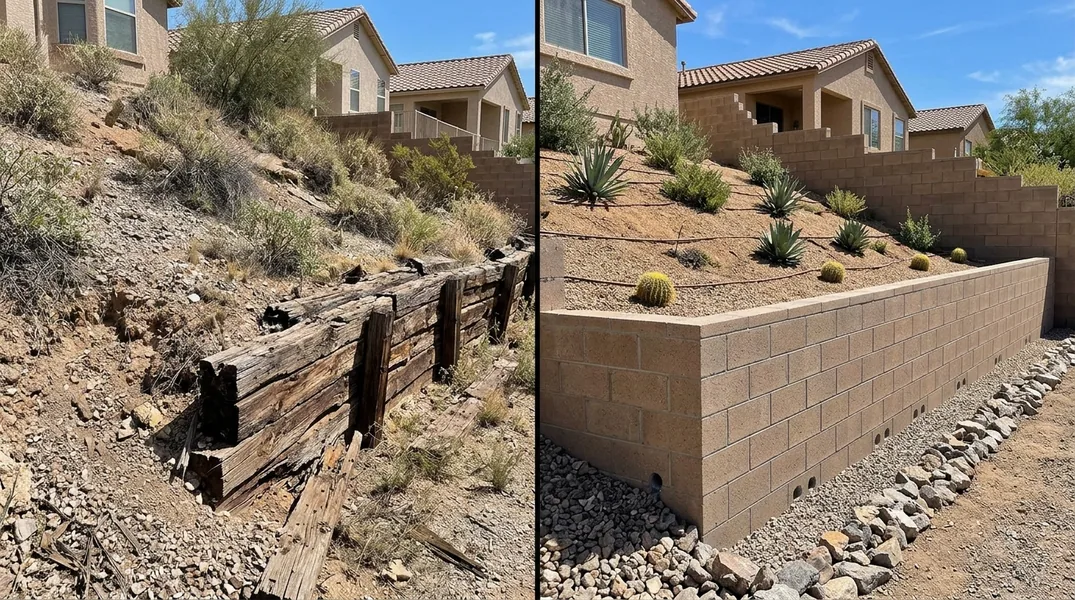
Why Tucson's Monsoon Season Is So Hard on Retaining Walls
Every summer, Tucson braces for monsoon season, and for good reason. Storms that build over the Sonoran Desert can drop more rain in an hour than the area typically sees in a month. That water has to go somewhere, and all too often it ends up behind a retaining wall that was never designed to handle it. When the ground behind a wall becomes saturated, the soil expands and pushes outward with tremendous force. That force is called hydrostatic pressure, and it is the single most common reason retaining walls fail in southern Arizona.
The problem is compounded by our soil. Much of the Tucson basin is built on caliche, a hard, cement-like layer that resists water absorption. Rain that cannot soak in runs off quickly and pools wherever it can, including against the back of your wall. Add in the fact that many older walls were installed with little or no drainage planning, and you have a recipe for bowing, cracking, and eventual collapse. Homeowners in Oro Valley and other foothill communities face an extra challenge because water rushing down slopes concentrates against walls at the bottom.
How Hydrostatic Pressure Quietly Destroys a Wall
Hydrostatic pressure is the weight of water pushing against a surface. When soil behind a retaining wall holds moisture, that water adds hundreds or even thousands of pounds of lateral force to a structure that was only engineered to hold back dry earth. Most residential walls are not built with this extra load in mind. Over time, the constant push causes the wall to lean, the blocks to shift, and the mortar or joints to crack. Once cracks form, water enters more easily, and the cycle accelerates.
In Tucson, this process can happen surprisingly fast. A single severe monsoon storm can saturate the soil behind a wall in minutes. If that water has no way to escape, it sits there, softening the soil and increasing pressure until something gives. Homeowners often notice the symptoms before total failure: a wall that was once straight now leans slightly, or a section of block has separated from the rest. Ignoring these warning signs is risky. What starts as a cosmetic issue can become a safety hazard, especially if the wall is holding back a slope near a house or driveway. Professional Retaining Wall Repair can address the damage before it spreads, but prevention is always the better investment.
The Role of a Retaining Wall French Drain
The most effective defense against hydrostatic pressure is a properly designed drainage system, and the workhorse of that system is the retaining wall french drain. A french drain is a trench filled with gravel and a perforated pipe that collects groundwater and carries it away from the wall. In a retaining wall application, the drain is installed at the base of the wall, behind the wall material, and it is typically wrapped in filter fabric to keep soil from clogging the pipe. When installed correctly, a french drain gives water a path of least resistance, so it flows out and away instead of building up pressure.
Many failing walls in South Tucson and across the city were built without any drainage at all. Some have weep holes, but weep holes alone are often not enough during a heavy monsoon. A complete system also includes a gravel backfill zone and, in some cases, a surface drainage channel at the top of the wall to divert runoff before it ever reaches the soil. If you are planning a new wall, make sure your contractor includes a french drain in the scope. If you already have a wall, a drainage retrofit can often be added during a repair or Retaining Wall Replacement project. For a professional assessment of your wall's drainage, call Tucson Retaining Wall at (520) 467-5911.
Warning Signs Your Wall Has a Drainage Problem
Not all drainage problems announce themselves with a collapsed wall. In fact, most walls give plenty of warning if you know what to look for. One of the earliest signs is water pooling at the base of the wall after a storm and staying there for days. Another is soil erosion at the top of the wall, where water has washed away backfill and left a depression. You might also notice efflorescence, a white, powdery stain on concrete or block, which indicates water is moving through the wall and depositing minerals on the surface. Any of these signs mean water is not being managed properly.
Structural symptoms are more serious. A wall that leans, bulges, or has horizontal cracks is under excessive pressure and needs attention right away. In some cases, the wall may have settled unevenly, creating a wavy top line. If you see any of these issues, do not wait for the next monsoon. A small repair now is far less expensive than a full replacement later. Homeowners in Marana and other areas with expansive soils should be especially vigilant, because soil movement and water combine to put extra stress on retaining structures.
Retaining Wall Drainage Solutions Near Me: When to Call a Pro
If you are searching for retaining wall drainage solutions near me, you are probably already concerned about your wall. The good news is that many drainage problems can be corrected without tearing down the entire wall. A professional can inspect the wall, identify where water is entering and pooling, and recommend a fix. Sometimes the solution is as simple as clearing clogged weep holes or adding a surface drain. In other cases, a new french drain or a full drainage retrofit is needed. For walls that are already showing structural damage, Retaining Wall Installation of a new, properly drained wall may be the most cost-effective long-term choice.
When you work with an experienced contractor, ask specifically about drainage. A good installer will talk about gravel backfill, filter fabric, perforated pipe, and outlet locations before you ever discuss block style or color. They will also evaluate your site's slope and soil conditions, because a wall on a hillside needs different drainage than a wall on flat ground. If you want a wall that will stand up to decades of monsoon seasons, start with a free estimate and a drainage conversation. You can also review typical pricing to budget for the project. Tucson Retaining Wall serves the entire metro area and can help you protect your property before the next storm hits.
Looking for a professional retaining wall contractor in Tucson? Tucson Retaining Wall responds fast for all your retaining wall needs.
Get a Free QuoteOur services: Retaining Wall Installation · Retaining Wall Repair · Retaining Wall Replacement